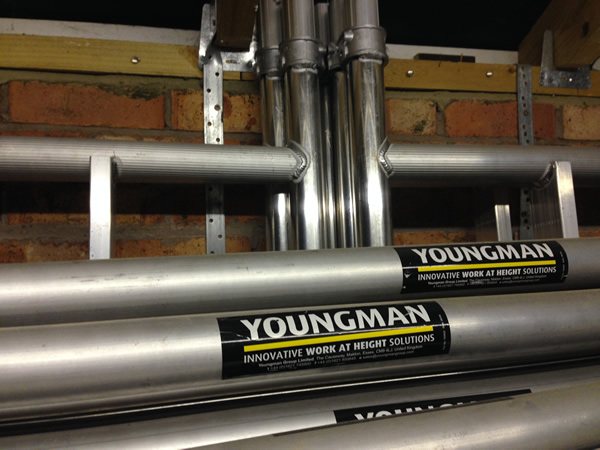
A mobile access tower, whether it is aluminium or steel, is a set of frames, braces, platforms and guardrails that is assembled on site and moved on castors. It is much cheaper than a powered platform and is widely used for decorating, maintenance and installation work. A used tower is a sound buy if it is complete and undamaged, because the parts all depend on one another for the tower to be safe.
Before you buy
- Make and system. Towers are designed as a system by each manufacturer. Parts from different manufacturers should not be mixed unless the manufacturer says they are compatible, so ask what system the tower is.
- Manual. Ask for the assembly manual. It shows the maximum platform height for indoor and outdoor use, the stabiliser requirements and the parts list. A tower without a manual is harder to assemble correctly.
- Standard. Look for the manufacturer’s labels and the reference to the standard for mobile access towers, BS EN 1004.
- What is included. Compare what is on offer with the parts list, and check the number of frames, braces, platforms, guardrails, toe boards, castors and stabilisers.
Frames, braces and guardrails
- Look along every frame and brace for bends, dents, cracks and weld repairs. A bent tube should be rejected, not straightened.
- Check the locking claws, cams or clips on every frame and brace. They should close firmly and spring back, with no wear that stops them gripping.
- Check the guardrails and toe boards fit and lock in place, and that there are enough for the height you need.
Platforms and access
- Check each platform for cracks and warped decking, and that the trapdoor hatch opens, closes and latches.
- Check the ladder rungs or the internal ladder frames for damage.
- Check the platform hooks or clips that hold the platform in place.
Castors and stabilisers
- Check that each castor swivels freely, and that the brake locks the wheel and the swivel.
- Check the stabilisers or outriggers for bends and that their adjustable feet work. The tower depends on them for stability.
- Check the castor stems and plates for cracks.
Using it safely
The law on working at height is the Work at Height Regulations 2005. HSE advises that a tower should be assembled and dismantled only by competent people, following the manufacturer’s instructions, on firm and level ground, with the castors braked and the stabilisers set. Training from PASMA, the trade body for mobile towers, is the usual way to show competence. A tower must be inspected after it is assembled and before it is used, and again after anything that could affect its safety, such as bad weather or alterations. Where it is used for construction work and someone could fall two metres or more, it must also be inspected at least every seven days while it stays in place, with a written report. Read the guide to PUWER and second-hand machinery for the wider duties on equipment that is bought used.
Unlike a cherry picker or scissor lift, a tower is not a lifting machine, so it does not need the six-monthly LOLER examination. It should still be checked for damage each time it is assembled, and any part that is damaged should be replaced with a part from the same manufacturer.
Paperwork and transport
- Get a receipt that lists the components, so that you can check the tower is complete when you collect it.
- Check the seller owns it. A tower that came from a hire company or a former employer may still belong to them.
- Towers take apart for transport and fit in a van. Read the guide to transporting used machinery.
Summary: buying a used access tower
Check that the tower is a complete system, that the frames and braces are straight, that the claws lock, that the platforms, guardrails and stabilisers are all present, and that you have the manual. Then browse used aluminium towers or used scaffold towers, or read the guide to what to check when buying used machinery.