
Collection and delivery can cost a significant share of a used machine’s price, and a badly planned move is one of the most common ways for a sale to go wrong. This guide explains how to transport machinery in the UK safely: the options available, the licence and load rules, and what buyers and sellers should agree before the day.
Agree the details before the sale
- Agree in writing who arranges and pays for transport, and who is responsible for loading.
- Find the machine’s weight, length, width and height from the data plate or manual, including any attachments that travel with it.
- Check access at both ends: gateways, doors, floor strength, overhead cables, and space for a lorry to turn and unload.
- Agree when risk passes to the buyer, and photograph the machine before it is loaded.
Ways to transport machinery
Trailer behind a van or 4×4
Suitable for micro and mini diggers, compact plant and smaller workshop machines. Since 16 December 2021, drivers who passed their car test from 1 January 1997 onwards can tow a trailer of up to 3,500kg maximum authorised mass without a separate trailer test, provided the towing vehicle is rated to tow it. Drivers who passed before 1997 usually keep entitlement to a combination of up to 8,250kg. The trailer’s own weight counts towards its maximum authorised mass, so a three-tonne machine on a heavy plant trailer can exceed the limit. Business use of heavier combinations can also bring operator licence and tachograph rules into play, so check DVSA guidance if in doubt.
Plant lorry or beavertail
Machines that can drive on, such as excavators, dumpers, rollers and access platforms, are usually moved on a beavertail lorry with ramps. The operator must be competent on the machine being loaded, and the ramps and ground must be suitable.
Crane lorry (lorry loader)
Workshop and production machinery that cannot be driven is often lifted onto a lorry with its own crane. This is a lifting operation under LOLER, so it must be planned by a competent person and carried out with examined equipment, using the machine’s lifting points.
Low loader
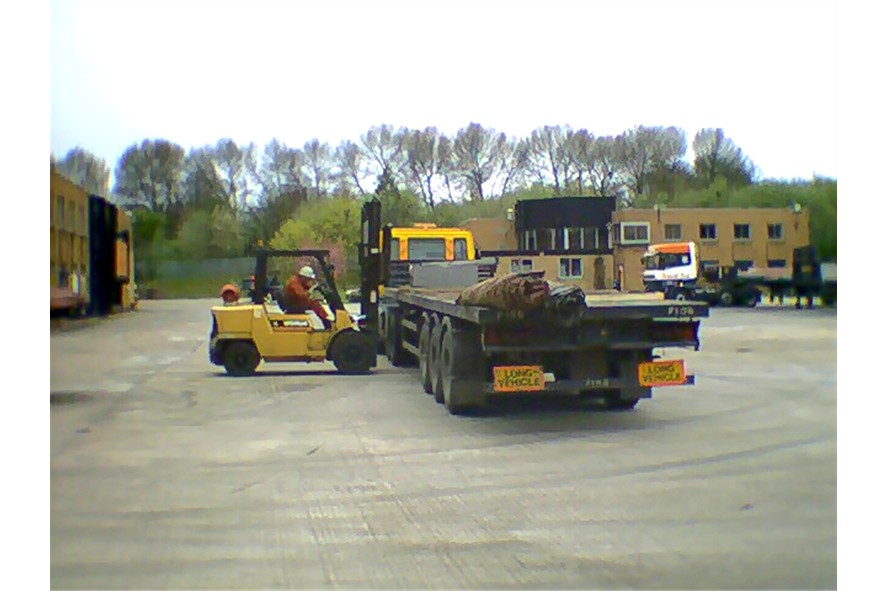
Heavy plant, large excavators and tall machines travel on a low loader. A vehicle and load is an abnormal load if it weighs more than 44,000kg, has an axle load over 10,000kg on a single non-driving axle or 11,500kg on a single driving axle, is wider than 2.9 metres, or has a rigid length over 18.65 metres. Abnormal loads must be notified in advance to the police and to the highway and bridge authorities on the route, normally through National Highways’ ESDAL system. A haulier experienced in plant movement will handle this.
Specialist machinery movers
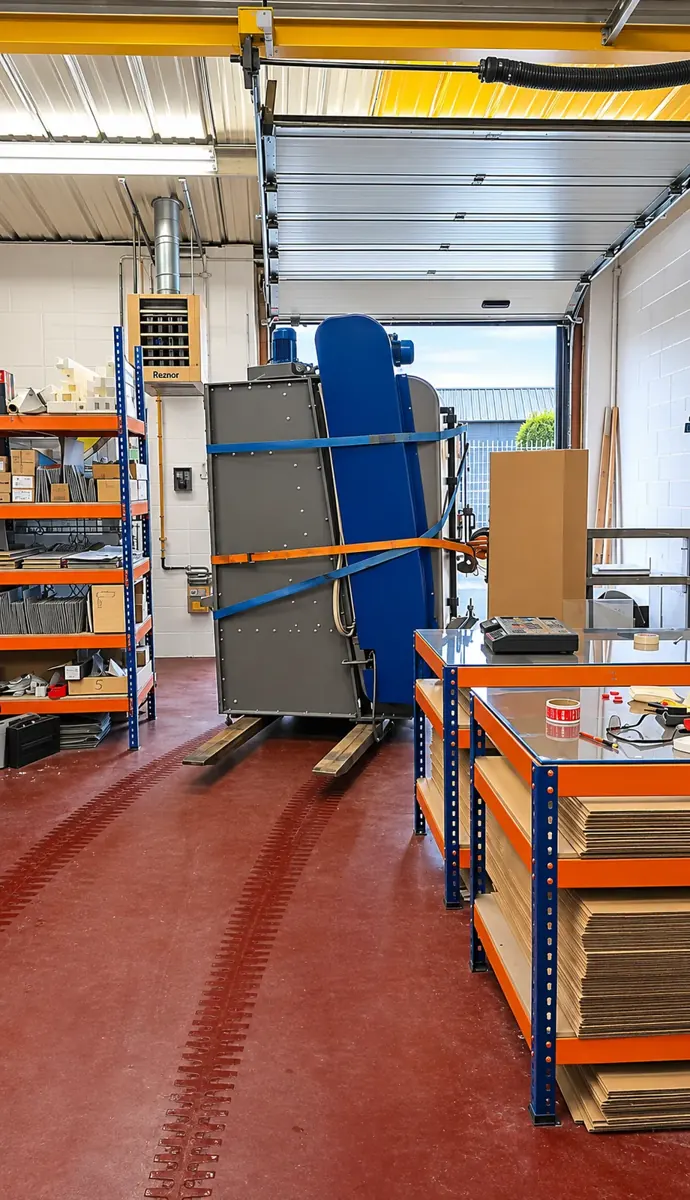
Heavy machines inside buildings, such as presses, CNC machines, glass tables and production lines, often need a machinery mover with skates, jacks and gantries to get them out of the building before they are loaded.
Preparing the machine
- Have the machine isolated and disconnected from electricity, air and water by a competent person.
- Fit transport locks or brackets supplied by the manufacturer, for example to lock the axes of CNC machinery.
- Lower booms and attachments, remove loose parts, and drain fluids where the manual says to.
- Pack loose items, tooling and manuals separately and list them on the delivery note.
Securing the load
The driver and the transport operator are responsible for making sure a load cannot move. Machinery should be secured with rated chains or straps to the vehicle’s anchor points, with tracks or wheels chocked, the parking brake applied, booms and arms lowered and secured, and anything that could swing or fall off removed. Check the securing again after the first few miles. DVSA publishes guidance on securing loads on heavy goods vehicles.
Insurance
Ask the haulier for proof of goods in transit insurance and check the cover limit against the machine’s value. Many standard policies cover far less than the value of a large machine. If the buyer collects, the buyer’s own vehicle and trailer insurance applies.
Summary: how to transport machinery
Agree who moves the machine and who loads it before the sale, measure and weigh it, choose the right vehicle, check licences and abnormal load rules, secure it properly and confirm the insurance. For other checks, read what to check when buying used machinery, or browse used machinery for sale and sort by distance to find machines close to you. See also GOV.UK guidance on abnormal loads.
Used construction and plant for sale
Nothing listed right now. More used machinery will be listed as sellers join.
Related guides
Images: Photo: Derek Mowbray, CC BY-SA 2.0, via Wikimedia Commons (Geograph)