
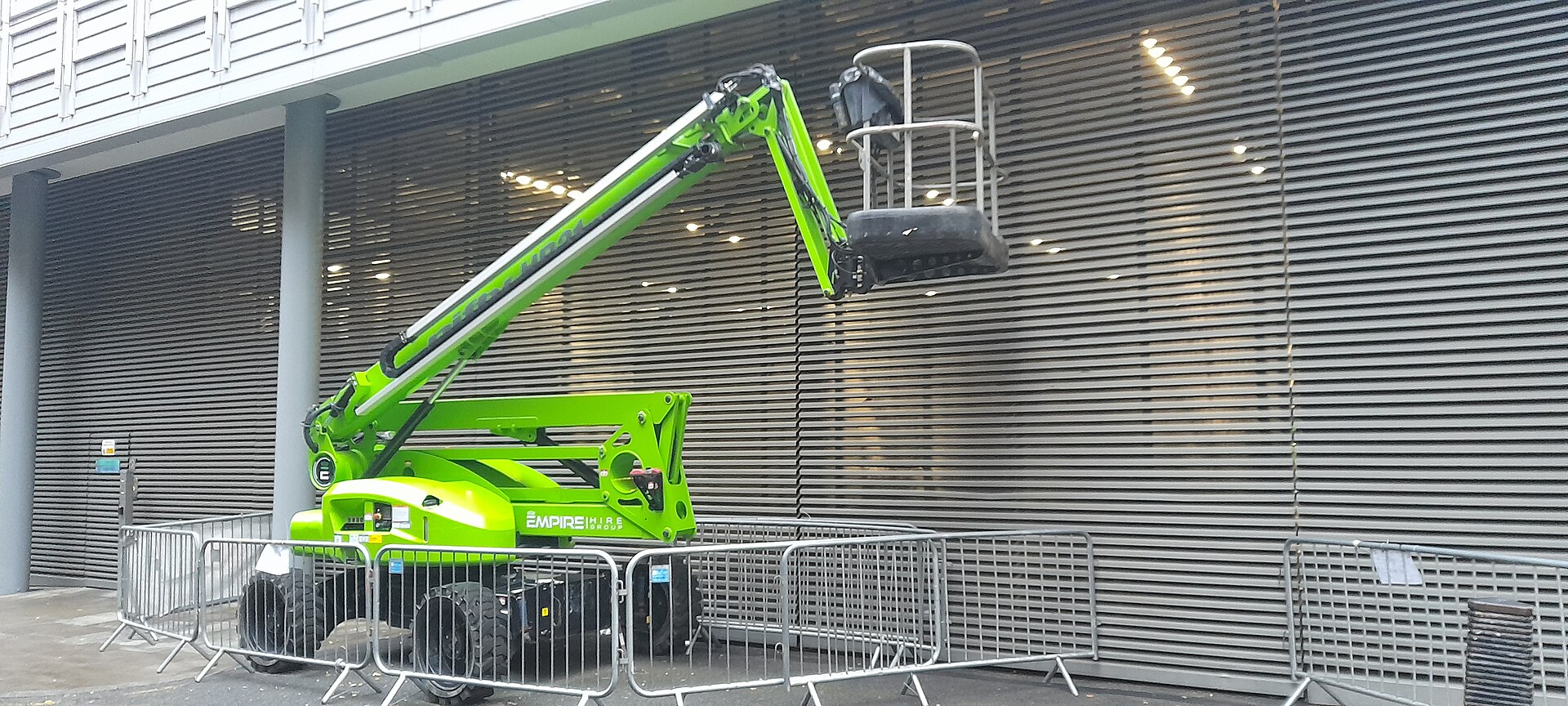
Cherry pickers, scissor lifts and other mobile elevating work platforms (MEWPs) carry people, so a used one has to be right before it is used. This checklist covers what to check before buying a used cherry picker or boom lift, whether it is a self-propelled articulated machine, a telescopic boom or a trailer-mounted unit.
Before you view
- Working height and outreach. Check the maximum working height and the horizontal outreach on the data plate. The platform height is lower than the working height, so decide which figure matters for your job.
- Platform capacity. The safe working load, in kilograms, is shown on the platform and on the data plate. It decides how many people and how much equipment the platform can carry.
- Power. Diesel suits rough ground and outdoor work. Battery machines suit indoor work and are quieter. Hybrid and dual-power machines can do both.
- Hours and age. Compare the hours with the general wear, and ask about the machine’s history, such as whether it came from a hire fleet.
- Paperwork. Ask for the latest LOLER thorough examination report, the service history, any manuals and the serial number.
Platform, booms and structure
- Check the platform, the guardrails, the toe boards and the gate or bar for damage, and that the harness anchorage points are present.
- Look along the boom sections and the jib for cracks, weld repairs, dents and bent members.
- Check the pins, bushes and slew ring for play and wear, and the rams and hoses for oil leaks and chafing.
- Raise and lower the boom through its full range and extend it fully. It should move smoothly, without jerking or noise.
Controls and safety systems
- Test the platform controls and the ground controls. The ground controls must be able to override the platform, and the emergency lowering must work from the ground.
- Check the emergency stop buttons, the tilt alarm and the overload or load-sensing system, and the audible alarms.
- Check that the interlocks work, so that driving is restricted when the boom is raised, and the outriggers or axles lock as the manufacturer intends.
- Check the labels and decals. Missing or illegible safety decals can be replaced, but they should be present before the machine is used.
Chassis, tyres and drive
- Look at the chassis for cracks and impact damage, and at the axles for leaks.
- Check the tyres, or the tracks on a tracked machine, for cuts and wear. Foam-filled tyres are not repaired in the same way as air-filled tyres.
- Test the drive, steering and brakes, including the parking brake on a slope.
- On machines with outriggers, check each outrigger, the pads and the interlocks.
Engine or batteries
- Diesel. Start from cold if possible. Check for smoke, leaks and unusual noise, and ask when the filters and oil were last changed.
- Battery. The batteries are often the most expensive item to replace. Ask their age, check that the machine runs through a full working cycle, and check the charger works and suits your supply.
The law: examination, training and use
HSE guidance is that a MEWP must be thoroughly examined by a competent person at least every six months, or under an examination scheme drawn up by a competent person. The report should show when the examination was carried out and when the next one is due. Records should be available when the machine is sold on. If the examination is out of date, the machine should not be used until it has been examined.
Operators need a recognised training course, with a card or certificate that lists the machines they are trained on, and familiarisation on the make and model they will use. Where there is a risk of falling from the platform, HSE advises a harness with a short restraint lanyard, attached to the anchorage point provided in the platform. Daily pre-use checks, firm and level ground, and a rescue plan are part of using the machine safely. Read the guide to PUWER and second-hand machinery for more.
Paperwork and payment
- Check that the serial number on the machine matches the invoice and any registration or hire-fleet documents.
- Get proof of ownership and written confirmation that no finance is outstanding.
- Pay by bank transfer to an account in the seller’s or business’s name once you have seen the machine.
- Plan the transport, since a cherry picker is tall and heavy. Read the guide to transporting used machinery.
Summary: buying a used cherry picker
Check the structure of the boom, the controls and emergency lowering, the chassis and tyres, the engine or batteries, and the paperwork, including the latest six-monthly examination report. Then browse used cherry pickers for sale, or read the general guide to what to check when buying used machinery.
Used cherry pickers for sale
Nothing listed right now. More used machinery will be listed as sellers join.
Related guides
Images: Photo: David Howard, CC BY-SA 2.0, via Wikimedia Commons (Geograph)